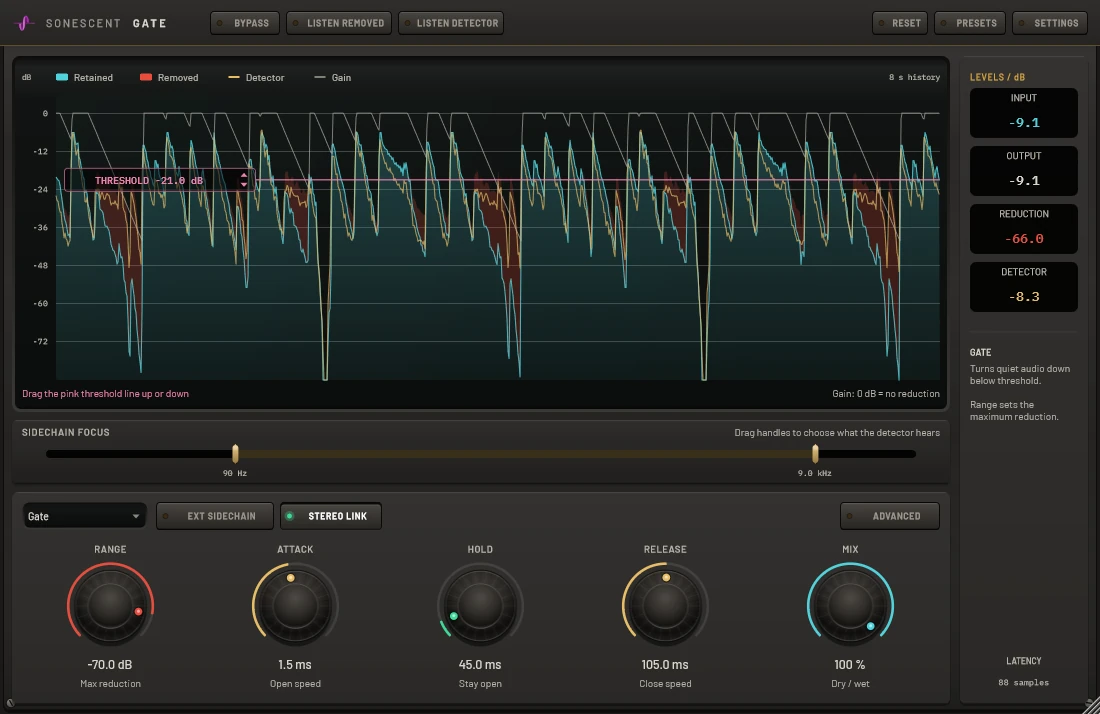
Nothing here is named after gear it imitates, and nothing is hidden behind a single amount knob. Each control does one thing, and the display shows it doing that thing.
Sidechain focus
Two handles set the band the detector listens to, with 12 dB per octave slopes, so a snare gate can ignore the kick or a kick trigger can ignore the cymbals. It changes what opens the gate, never the tone of what comes out. LISTEN DETECTOR plays exactly what the detector hears.
LISTEN REMOVED
Hear only what the gate is taking out, at the current MIX. If you hear bleed and room, the settings are right. If you hear the start or the tail of the note itself, they are not.
Lookahead
Zero to 20 ms, 2 ms by default. The detector reads ahead, so the gate is already open on the first sample of a hit instead of clipping its attack. The delay is reported to your DAW to the sample and shown in the meter panel.
A bypass that lines up
BYPASS crossfades to the input delayed by the same lookahead, so switching it in and out never clicks and never shifts timing. The display keeps drawing what the gate would do.
Stereo link
Linked, one detector drives both channels, so the image stays put. Unlinked, each side gates on its own, for stereo sources that are really two separate microphones.
Presets that explain themselves
Sixteen factory starting points in three groups, gate, expander and duck, from drum and guitar cleanup to podcast room tidying, keyed ducking and trance gating. Each one is described in the menu, and the keyed ones say what to route to the sidechain.
Undo
64 steps of undo and redo over every sound setting, including preset loads and RESET, from the keyboard or the presets menu.
Light on the CPU
A single detector and a gain stage, with no oversampling to pay for, so it can sit on every drum microphone in a session.